Tiny or reduced budgets shouldn't hold back opportunity. Instead of letting financial limits lock us into 'Box Mode,' we use them as a
springboard straight into 'Ball Mode.'
Here’s why.
Surprisingly, the tighter the restrictions sometimes means the more creative we are forced to become. The more boundaries we
have, the more we can imagine and more than not we don't choose between creativity and constraints; we move between them
constantly.
As marketers we see business owners facing this exact dance today, especially when consumer spending begins to soften and wallet
strings tighten.
When budgets shrink, you have to really start to think differently depending on what you sell. If you’re marketing high-ticket
items, whether that’s real estate a premium product, your consumers flex zone is tiny. Expensive items have minimal flex. They have to
perform flawlessly and make the buyer feel amazing for spending the money. Less expensive items, on the other hand, have a
massive flex zone: if a low-cost item falls a little short, the buyer shrugs it off. But when money is tight and the purchase is
significant, persuasion demands a seamless blend of precision and imagination.
That’s why mastering the switch between creativity and optimisation has become essential.
Think of this as moving between two distinct modes:
-
Box Mode (Structured Thinking): Where you ground yourself in reality, analysing data, identifying market opportunities,
understanding restrictions, or spotting consumer pain points.
-
Ball Mode (Exploratory Thinking): Where you play, imagine, and develop ideas that genuinely excite someone enough to take
action.
The traditional approach kept these two worlds separate. Researchers did the numbers, creatives did the dreaming. But in an unpredictable
market, those days are over. The real magic happens when you constantly switch back and forth between the two.
Here's an example we all can relate to
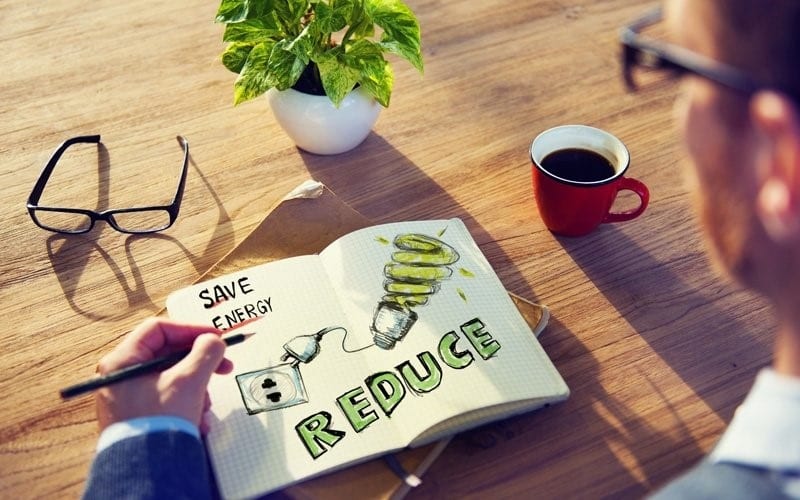
Take energy efficiency as an example. Search data might show that consumers are desperate for ways to lower their power bills (Box
Mode).
Instead of churning out another dry listicle like "10 Ways to Save Energy," you switch to Ball Mode: What if we
turned energy saving into an interactive family game? What if schools competed in a regional energy-saving challenge?
'%3E%3Crect x='0' y='0' width='1024' height='640' fill='%23a18a73'/%3E%3Cg transform='scale(4.00) translate(0.5 0.5)'%3E%3Cg transform='translate(117.68 110.23) rotate(87.88) scale(31.60 52.18)'%3E%3Cellipse fill='%23e5ffe2' fill-opacity='0.50' cx='0' cy='0' rx='1' ry='1'/%3E%3C/g%3E%3Cg transform='translate(151.79 159.00) rotate(166.35) scale(71.01 23.49)'%3E%3Cellipse fill='%2306000b' fill-opacity='0.50' cx='0' cy='0' rx='1' ry='1'/%3E%3C/g%3E%3Cg transform='translate(22.60 14.74) rotate(129.81) scale(38.81 85.30)'%3E%3Cellipse fill='%23fff0a8' fill-opacity='0.50' cx='0' cy='0' rx='1' ry='1'/%3E%3C/g%3E%3Cg transform='translate(246.13 23.82) rotate(294.50) scale(157.20 46.37)'%3E%3Cellipse fill='%236a3240' fill-opacity='0.50' cx='0' cy='0' rx='1' ry='1'/%3E%3C/g%3E%3Cellipse fill='%23000061' fill-opacity='0.50' cx='51' cy='158' rx='18' ry='54'/%3E%3Cellipse fill='%23206b00' fill-opacity='0.50' cx='100' cy='10' rx='32' ry='20'/%3E%3Cg transform='translate(249.11 135.31) rotate(329.53) scale(18.55 12.33)'%3E%3Cellipse fill='%23ffffff' fill-opacity='0.50' cx='0' cy='0' rx='1' ry='1'/%3E%3C/g%3E%3Crect fill='%23010000' fill-opacity='0.50' x='173' y='49' width='23' height='30'/%3E%3Cpolygon fill='%23deb57d' fill-opacity='0.50' points='224.39,73.24,185.89,45.43,108.16,-9.26,227.63,-13.05'/%3E%3Crect fill='%2300001b' fill-opacity='0.50' x='230' y='0' width='26' height='31'/%3E%3C/g%3E%3C/g%3E%3C/svg%3E)
You launch the campaign, then switch straight back to Box Mode to track engagement, conversion, and inquiries. Then you
switch again: how do we take what worked in that experiment and turn it into a broader movement?
Data shouldn't kill creativity; it should inspire better questions.
When you view this as switching modes rather than dividing people into "analytical types" and "creative types," your entire team gets to
participate. When you’re stuck looking at spreadsheets, pause and ask your team: "We’ve been staring at the numbers for an hour, what
does our intuition say?" Or when an idea feels too wild: "Let's pop into Box Mode for ten minutes, what does the search data tell us about this gap?"
You can even use AI this way: prompt it in Box Mode to analyse market trends, then switch to Ball Mode and ask it for the most outrageous,
unexpected angle on that same data.
When consumer spending softens, doing "what we've always done" won't command attention. It’s the constant rhythm between optimising what you
have and transforming it into something magical that persuades a buyer to choose you over everyone else.
Are you ready to take a very different look at things?