The art of comeback
There is a distinct sound deeply woven into the fabric of global domestic life: the unmistakable, satisfying pop of a perfect,
airtight plastic seal.
For decades, that sound belonged exclusively to Tupperware. Yet, even the most iconic household staples are not immune to the
ruthless shifts of modern commerce. Just two years after its US parent company filed for Chapter 11 bankruptcy and structurally consolidated
operations under new ownership, Tupperware has pulled off a masterclass in brand revival and it is staging its official return to Australia
and New Zealand effective immediately.
The resurrection of this legacy giant isn’t a coincidence. It is the result of a deliberate, two-pronged strategy: evolving product design
to meet modern lifestyle demands, and leveraging the market muscle of a heavy-hitting local distribution partner.
The Evolution of the Burp: Design Made for 2026
When Earl Tupper introduced his pioneering airtight containers in 1946, the innovation was entirely about preservation. In the mid-century
suburban boom, a container's sole job was to keep food fresh.
But as consumer habits shifted toward minimalist, hyper-organised, and fast-paced spaces, the classic plastic tub faced fierce aesthetic and
environmental competition. To survive, Tupperware had to radically rethink its design language.
The brand's modern evolution proves it is no longer just about survival; it’s about integration. Tupperware shifted its focus from basic
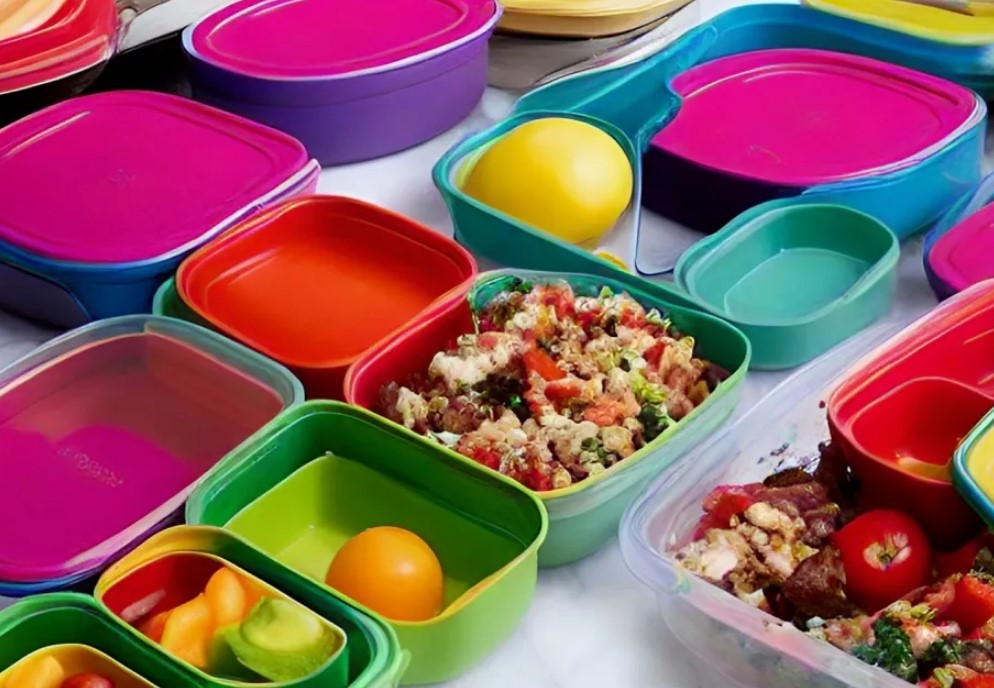
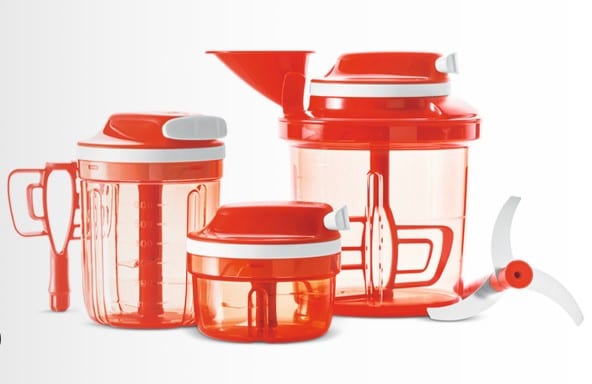
storage to multi-functional, premium kitchen tools. Think stackable, space-saving geometric layouts, sleek material innovations like glass
and high-grade microwavable composites, and colour palettes designed to look beautiful on open kitchen shelving rather than hidden away in a
dark pantry. By treating storage as an architectural extension of the modern home, Tupperware successfully transitioned from a nostalgic
memory into a contemporary lifestyle asset.
'%3E%3Crect x='0' y='0' width='1024' height='660' fill='%23eeccc5'/%3E%3Cg transform='scale(4.00) translate(0.5 0.5)'%3E%3Cellipse fill='%23d33f1c' fill-opacity='0.50' cx='114' cy='117' rx='59' ry='31'/%3E%3Cpolygon fill='%23d41b06' fill-opacity='0.50' points='164.75,82.85,87.60,17.25,192.27,25.45,198.89,55.64'/%3E%3Cg transform='translate(235.51 49.07) rotate(84.97) scale(255.00 42.15)'%3E%3Cellipse fill='%23ffffff' fill-opacity='0.50' cx='0' cy='0' rx='1' ry='1'/%3E%3C/g%3E%3Cg transform='translate(70.07 70.82) rotate(208.44) scale(27.52 23.11)'%3E%3Cellipse fill='%23c95b40' fill-opacity='0.50' cx='0' cy='0' rx='1' ry='1'/%3E%3C/g%3E%3Cg transform='translate(50.08 15.26) rotate(336.69) scale(230.29 33.04)'%3E%3Cellipse fill='%23f7ffff' fill-opacity='0.50' cx='0' cy='0' rx='1' ry='1'/%3E%3C/g%3E%3Cg transform='translate(122.54 159.70) rotate(-3.49) scale(255.00 12.86)'%3E%3Cellipse fill='%23ffffff' fill-opacity='0.50' cx='0' cy='0' rx='1' ry='1'/%3E%3C/g%3E%3Cg transform='translate(161.37 55.25) rotate(181.20) scale(42.56 9.70)'%3E%3Cellipse fill='%23d91100' fill-opacity='0.50' cx='0' cy='0' rx='1' ry='1'/%3E%3C/g%3E%3Cellipse fill='%23ffffff' fill-opacity='0.50' cx='75' cy='107' rx='6' ry='29'/%3E%3Crect fill='%23f3e4d9' fill-opacity='0.50' x='144' y='65' width='47' height='59'/%3E%3Cellipse fill='%23ffffff' fill-opacity='0.50' cx='165' cy='9' rx='255' ry='13'/%3E%3C/g%3E%3C/g%3E%3C/svg%3E)
'%3E%3Crect x='0' y='0' width='1024' height='883' fill='%23927f56'/%3E%3Cg transform='scale(4.00) translate(0.5 0.5)'%3E%3Cellipse fill='%23ffffff' fill-opacity='0.50' cx='187' cy='153' rx='36' ry='88'/%3E%3Cellipse fill='%23ff3800' fill-opacity='0.50' cx='80' cy='156' rx='61' ry='61'/%3E%3Cg transform='translate(80.31 53.27) rotate(270.26) scale(32.06 65.87)'%3E%3Cellipse fill='%233dffdb' fill-opacity='0.50' cx='0' cy='0' rx='1' ry='1'/%3E%3C/g%3E%3Cg transform='translate(255.00 59.61) rotate(58.78) scale(71.81 42.63)'%3E%3Cellipse fill='%23000000' fill-opacity='0.50' cx='0' cy='0' rx='1' ry='1'/%3E%3C/g%3E%3Cg transform='translate(12.23 118.33) rotate(-5.20) scale(20.80 76.48)'%3E%3Cellipse fill='%23251000' fill-opacity='0.50' cx='0' cy='0' rx='1' ry='1'/%3E%3C/g%3E%3Cg transform='translate(141 158) rotate(176) scale(15 86)'%3E%3Crect fill='%23000000' fill-opacity='0.50' x='-0.5' y='-0.5' width='1' height='1'/%3E%3C/g%3E%3Crect fill='%23dfe3d5' fill-opacity='0.50' x='148' y='74' width='75' height='88'/%3E%3Cg transform='translate(231 143) rotate(454) scale(50 16)'%3E%3Crect fill='%23000000' fill-opacity='0.50' x='-0.5' y='-0.5' width='1' height='1'/%3E%3C/g%3E%3Cg transform='translate(80.29 90.52) rotate(89.17) scale(17.66 59.59)'%3E%3Cellipse fill='%2337703e' fill-opacity='0.50' cx='0' cy='0' rx='1' ry='1'/%3E%3C/g%3E%3Cpolygon fill='%23e3eee7' fill-opacity='0.50' points='253.82,148.07,171.76,219.47,251.86,173.93,223.77,82.31'/%3E%3C/g%3E%3C/g%3E%3C/svg%3E)
'%3E%3Crect x='0' y='0' width='1024' height='760' fill='%23b79d7f'/%3E%3Cg transform='scale(4.00) translate(0.5 0.5)'%3E%3Cg transform='translate(20 118) rotate(66) scale(51 46)'%3E%3Crect fill='%23340b00' fill-opacity='0.50' x='-0.5' y='-0.5' width='1' height='1'/%3E%3C/g%3E%3Cg transform='translate(154.22 174.08) rotate(266.13) scale(26.45 201.46)'%3E%3Cellipse fill='%23f1f3e6' fill-opacity='0.50' cx='0' cy='0' rx='1' ry='1'/%3E%3C/g%3E%3Cpolygon fill='%23602300' fill-opacity='0.50' points='56,-16 129,73 84,84'/%3E%3Crect fill='%23000000' fill-opacity='0.50' x='0' y='38' width='30' height='32'/%3E%3Cellipse fill='%238c5017' fill-opacity='0.50' cx='215' cy='66' rx='43' ry='26'/%3E%3Cg transform='translate(159.96 56.12) rotate(272.62) scale(34.63 14.41)'%3E%3Cellipse fill='%23f2eee6' fill-opacity='0.50' cx='0' cy='0' rx='1' ry='1'/%3E%3C/g%3E%3Cg transform='translate(109.47 130.88) rotate(165.45) scale(40.52 26.08)'%3E%3Cellipse fill='%23ffa24d' fill-opacity='0.50' cx='0' cy='0' rx='1' ry='1'/%3E%3C/g%3E%3Cpolygon fill='%23fff4ed' fill-opacity='0.50' points='206,129 245,90 178,93'/%3E%3Cpolygon fill='%23772401' fill-opacity='0.50' points='234,75 218,14 178,-15'/%3E%3Cellipse fill='%23e7fdc3' fill-opacity='0.50' cx='61' cy='78' rx='14' ry='35'/%3E%3C/g%3E%3C/g%3E%3C/svg%3E)
Reviving a brand through trusted networks
Great design, however, means very little if it cannot reach the consumer. The real genius behind Tupperware’s Australian relaunch is its
departure from the isolated 'direct-to-consumer party' model of the past, stepping instead into a powerful corporate partnership.
By joining forces with Hag Import Corporation, Tupperware instantly plugs into an elite, sophisticated distribution
ecosystem that handles some of the region's most trusted homeware brands. This alliance does something the original Tupperware
corporate entity couldn't achieve alone in its final years: it provides immediate operational stability, established retail relationships,
and a seamless digital pipeline.
As the Tupperware brand celebrates its landmark 60th anniversary in Australia, business has officially resumed through the relaunch of its
digital storefront.
'%3E%3Crect x='0' y='0' width='1024' height='700' fill='%23f0eeef'/%3E%3Cg transform='scale(4.00) translate(0.5 0.5)'%3E%3Crect fill='%231b1d1c' fill-opacity='0.50' x='148' y='74' width='88' height='11'/%3E%3Crect fill='%23313332' fill-opacity='0.50' x='149' y='23' width='82' height='13'/%3E%3Cpolygon fill='%23323433' fill-opacity='0.50' points='231.32,128.16,238.18,136.39,160.54,137.91,146.00,127.66'/%3E%3Crect fill='%23010302' fill-opacity='0.50' x='31' y='76' width='83' height='7'/%3E%3Cpolygon fill='%233f4140' fill-opacity='0.50' points='35.00,29.98,17.01,15.93,108.74,23.74,105.30,32.19'/%3E%3Crect fill='%23e0087e' fill-opacity='0.50' x='28' y='131' width='85' height='6'/%3E%3Cellipse fill='%23ffffff' fill-opacity='0.50' cx='163' cy='106' rx='247' ry='23'/%3E%3Cpolygon fill='%23000000' fill-opacity='0.50' points='36,75 23,72 45,71'/%3E%3Cellipse fill='%23ffffff' fill-opacity='0.50' cx='100' cy='164' rx='248' ry='28'/%3E%3Cellipse fill='%23e1027c' fill-opacity='0.50' cx='36' cy='127' rx='9' ry='9'/%3E%3C/g%3E%3C/g%3E%3C/svg%3E)
The Creative Cube takeaway
The Tupperware story is a powerful reminder for brands across any industry: legacy alone cannot sustain a business, but it can be
weaponised if paired with reinvention. By pairing modern design evolution with the infrastructure of an established local powerhouse like Hag Import Corporation, this brand
can rise from the brink of liquidation to reclaim its crown at the center of the kitchen table.
Image Source: Tupperware